JULY 08, 2013
(510) 486-6491 JHChao@lbl.gov
26
News Release
A generator that uses a virus to convert mechanical energy to electricity and a new material that will boost power storage in rechargeable batteries by 30 percent are among eight inventions by Lawrence Berkeley National Laboratory (Berkeley Lab) scientists that were honored with a 2013 R&D 100 Award, often dubbed the “Oscars of Innovation.”Presented by R&D Magazine, the R&D 100 Awards recognize the year’s top 100 technology products from industry, academia, and government-sponsored research, ranging from chemistry to materials to biomedical breakthroughs. The eight awards this year mark a record high for Berkeley Lab and brings the total of Berkeley Lab’s R&D 100 wins to 70, plus two Editors’ Choice Awards. In all, Department of Energy’s national laboratories and facilities won 36 R&D 100 Awards this year.
The Berkeley Lab inventions honored this year span the scientific gamut, from computing science to life science to materials science to nanoscience. “These eight R&D 100 awards are a testament to both the breadth and depth of science that we do at Berkeley Lab,” said Horst Simon, the Lab’s deputy director. “Moreover they also demonstrate our commitment to transforming the science into technologies that will address real issues in society today.”
A brief description of each of the winners follows.
High-throughput NIMS Screening: for low-cost, large-scale molecular samples
 Researchers at the Joint BioEnergy Institute (JBEI), led by Trent Northen, a staff scientist at JBEI and Berkeley Lab’s Life Sciences Division, have developed a high-throughput screening tool to support the development of lignocellulosic biofuels. High-Throughput Nanostructure-Initiator Mass Spectrometry (HT-NIMS) is a high-speed chemical screening system that can precisely determine the molecular composition of thousands of samples arrayed on a small slide of silicon at speeds 100 times faster than conventional methods.
HT-NIMS makes novel use of miniaturization, lasers, specialized chemistries, and robotics. In addition to the biofuels applications, the technology can also be used for a host of biological, bio-industrial, and medical uses, including discovering new drug prospects, cancer diagnostics, and clinical testing. Co-inventors with Northen were Berkeley Lab scientist Xiaoliang Cheng and San Diego, Calif.-based Nextval Inc.
Bacteriophage Power Generator: harnessing a virus to generate electricity
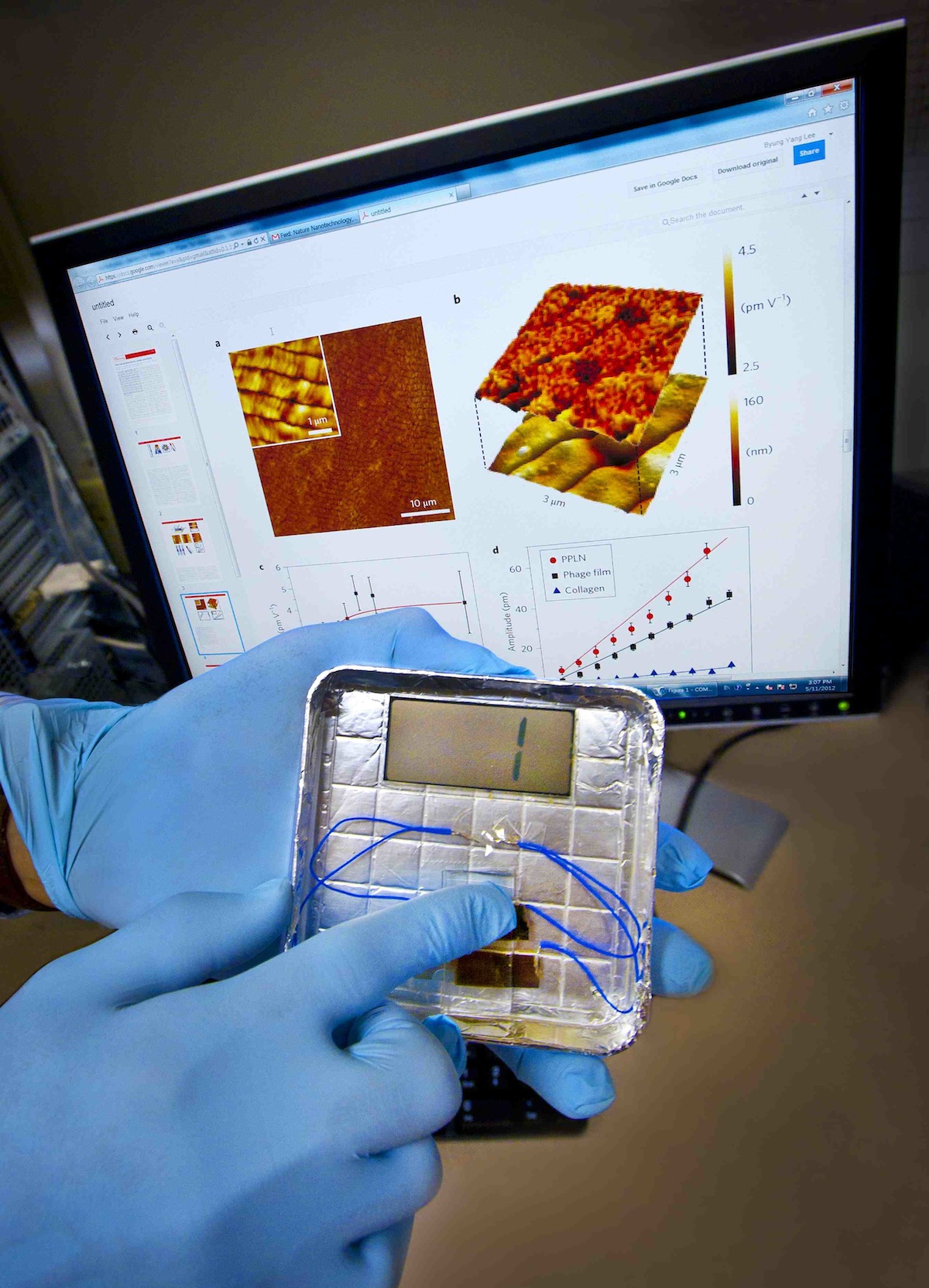 The Bacteriophage Power Generator generates power using harmless viruses that convert mechanical energy into electricity, providing a sustainable, cost-effective, nontoxic energy source capable of powering electronics and microdevices. It is unique in addressing the energy challenge of predominantly battery-driven devices. Developed by Seung-Wuk Lee working with Ramamoorthy Ramesh and Byung Yang Lee, all Berkeley Lab scientists, this generator is the first to produce electricity by harnessing the piezoelectric properties of a biological material.
Because the energy-generating virus infects only bacteria, it is not harmful to humans and is biocompatible and nontoxic, unlike conventional piezoelectric materials such as lead, cadmium, and lithium. This opens the door to applications in biomedical devices, particularly those to be implanted into the human body. This invention is also a breakthrough in the concept of nanomanufacturing, as it exploits the unique natural ability of a virus to synthesize materials that can self-assemble and selfreplicate.
Better Batteries with a Conducting Polymer Binder
 In an effort to make smaller, lighter, and cheaper batteries, a team led by Berkeley Lab scientist Gao Liu focused on improving the negative electrode, or anode. Their invention, the Conducting Polymer Binder, is a new material for use in rechargeable batteries. It can boost power storage capacity by 30 percent, a dramatic improvement in a field marked by little progress for more than a decade. The binder is literally a kind of flexible plastic glue that holds electrode materials together while facilitating the shuttling of electrons and positively charged lithium ions.
The new binder is unusually attractive for battery designers: it is strong, elastic, porous, and highly conductive. The elastic material stretches during the expansion of silicon particles as the battery charges, and contracts during discharge — giving silicon anodes the flexibility to “breathe.” The team used a soft X-ray beamline at the Advanced Light Source to analyze materials. Liu worked with Berkeley Lab scientists Wanli Yang, Lin-Wang Wang, and Vincent Battaglia and postdoctoral fellows Sang-Jae Park, Mingyan Wu, and Shidi Xun.
On-demand Secure Circuits and Reservation System (OSCARS): faster networks for science
OSCARS is a software service that creates dedicated bandwidth channels needed by scientists who must move massive, time-critical data sets between collaborators and computing centers around the world.
Through a simple web interface, OSCARS allows scientists and network operators to engineer, manage, and automate these dedicated channels, according to requirements of different scientific collaborations. Prior to OSCARS, setting up dedicated network channels could take weeks or months, and was often cost-prohibitive. Automation of this complex process—through a technique known as Software-Defined Networking—is accelerating scientific discovery in high-energy physics and other fields. OSCARS has been adopted by dozens of networks, universities, and research sites worldwide.

Development of OSCARS version 0.6 was led by Chin Guok, with significant contributions from Evangelos Chaniotakis, Andrew Lake, Eric Pouyoul, and Mary Thompson, all of ESnet, the Energy Sciences Network, which is managed by Berkeley Lab for the Department of Energy. In addition, Internet2 and Indiana University provided critical contributions through testing, quality assurance, and software packaging.
Universal Smart Window Coating: dynamic control over heat and light
The Universal Smart Window Coating was invented by a team of Berkeley Lab researchers headed by Delia Milliron of the Lab’s Molecular Foundry. Their technology enables dynamic control over how much of the sun’s heat and light enters a building through its windows. Unlike competing technologies, the Universal Smart Window Coating can block heat-producing near-infrared solar radiation without blocking visible light. This independent control is unique in the smart-window market and means occupants can have natural lighting indoors without unwanted thermal gain, reducing the need for both air-conditioning and artificial lighting. The same window can also be switched to a dark mode, blocking both light and heat, or to a bright, fully transparent mode.
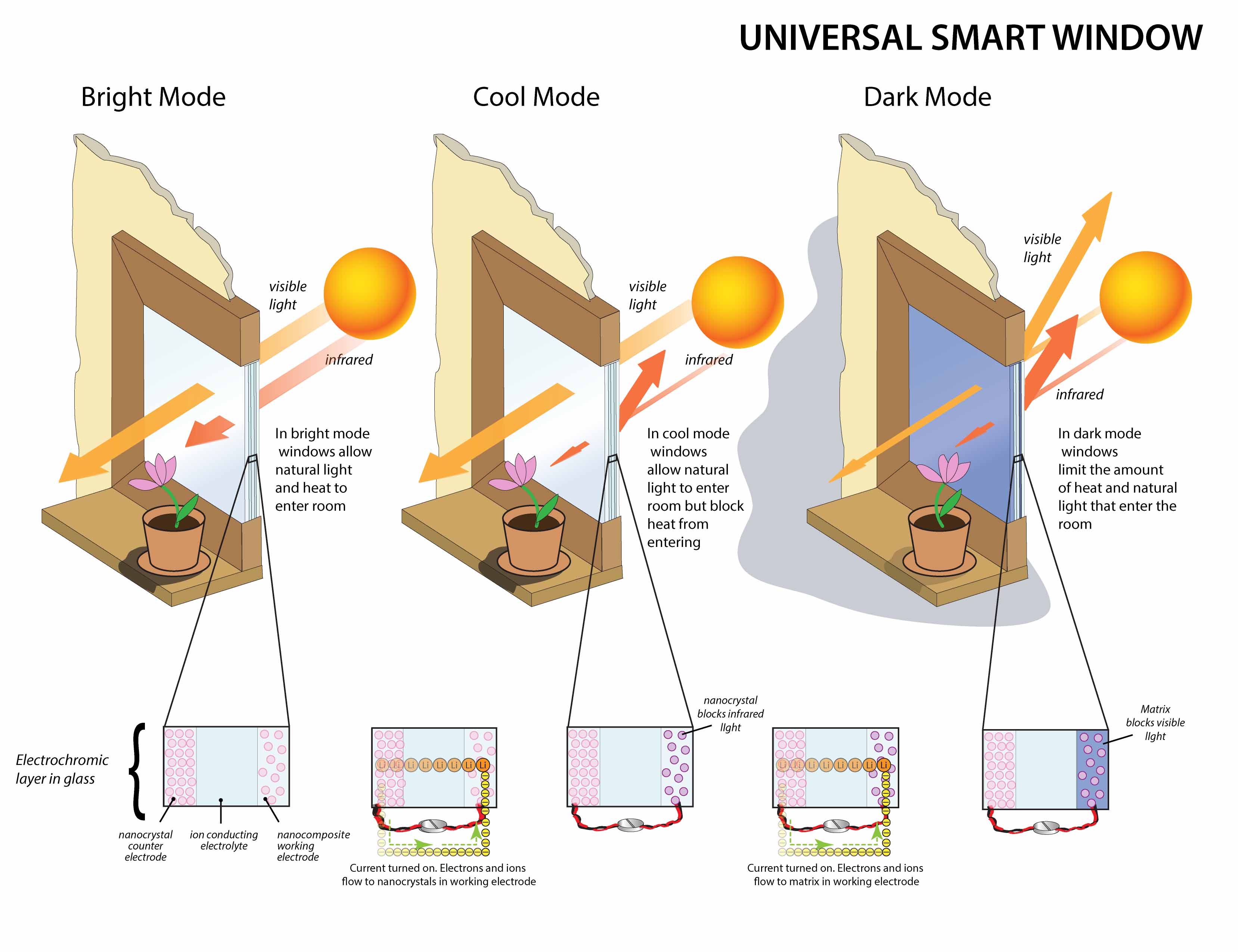 The Universal Smart Window Coating achieves this control with an inexpensive nanocomposite electrochromic coating developed by Milliron’s group. The low cost, minimal power requirements and responsive user experience of this technology are expected to drive broad deployment and make a significant impact on global energy consumption. The other members of the development team are Guillermo Garcia, Raffaella Buonsanti, and Anna Llordés.
Campanile Probe: Nano-Optical Imaging
The Campanile Probe is a powerful new tool for exploring matter at the nanoscale, delivering information about material composition and behavior with a resolution 100 times greater than what is currently possible. The tool was developed by a team of researchers working at the Molecular Foundry: Alex Weber-Bargioni, P. James Schuck, and Stefano Cabrini. The unprecedented detail and insight the Campanile Probe provides will help scientists design the materials of tomorrow, be they faster semiconductors, cheaper solar cells, or better drugs.
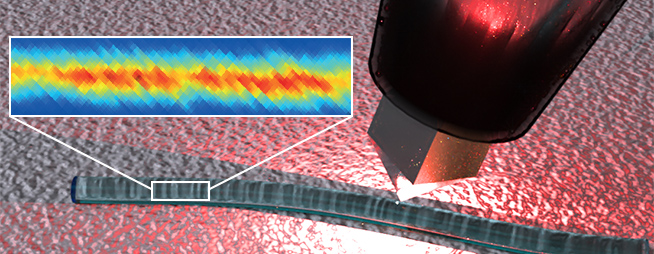
Named for the bell tower its shape resembles, the Campanile Probe uses an innovative design to enable optical spectroscopy with nanoscale resolution by squeezing light into a strongly enhanced field at the tip of an optical fiber. Despite the sophisticated quantum physics that underlie its design, the Campanile Probe is straightforward to use and can put the power of nanoscale spectroscopy into the hands of scientists from many fields.
Optically-Detected Oil Well Logging by MRI: peering deep into the earth
Optically-Detected Oil Well Logging by MRI (OWL-MRI) is a magnet-free MRI tool that measures the spatial distribution and quality of oil and gas in large geological formations and the physical properties of surrounding rock that most influence the economic and environmental expense of its extraction. The tool was developed by Berkeley Lab scientists Alex Pines and Vikram Bajaj, a Project Scientist in Pines’ laboratory, in collaboration with Scott Seltzer and Paul Ganssle; this is Pines’ fifth R&D 100 award and the second for Pines and Bajaj in the last three years.
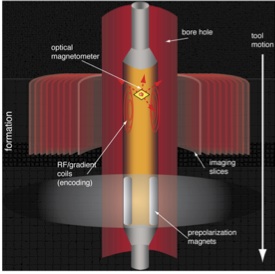 By using Earth’s magnetic field, rather than an array of permanent magnets, OWL-MRI probes many meters—rather than centimeters—deep into an oil formation, and provides information about the porosity of the rock and the chemistry of fluids it contains with a specificity previously accessible only in laboratory experiments. OWL-MRI can increase the accuracy and speed of oil well logging measurements (an $11.2 billion market) by a factor of 10 to 100, reducing the cost of oil exploration. When used to calibrate oil extraction, OWL-MRI will also reduce its environmental impact, particularly where hydraulic fracturing is necessary.
Cheap, Rugged Fuel Cells Can Provide Electricity Where None Exists
Point Source Power and Berkeley Lab won an R&D 100 award for the company’s Voto product. The innovative device is based on a solid oxide fuel cell that is powered by burning charcoal, wood or other types of biomass—even cow dung—the types of fuel that many in the developing world use for cooking. The fuel cell sits in the fire and is attached to circuitry in a handle that is charged as the fuel cell heats up to temperatures of 700 to 800 degrees Celsius. The handle, which contains an LED bulb, can then be detached and used for lighting or to charge a phone.
 Craig Jacobson, CEO and co-founder of Point Source Power, based in Alameda, California, co-invented the fuel cell in his 13 years as a materials scientist at Berkeley Lab. Working with Steve Visco, Mike Tucker and Lutgard DeJonghe, all still affiliated with the Lab, their breakthrough was in finding a way to replace most of the ceramics in the fuel cell with stainless steel, a far cheaper and more durable material.
# # #
Lawrence Berkeley National Laboratory addresses the world’s most urgent scientific challenges by advancing sustainable energy, protecting human health, creating new materials, and revealing the origin and fate of the universe. Founded in 1931, Berkeley Lab’s scientific expertise has been recognized with 13 Nobel prizes. The University of California manages Berkeley Lab for the U.S. Department of Energy’s Office of Science. For more, visit www.lbl.gov.

No comments:
Post a Comment