Search This Blog

Tuesday, June 30, 2015

Hoover Dam / Lake Mead

From the Bureau of Reclamation:


This stunning aerial photo of Hoover Dam and Lake Mead was taken just last week!

Tags:  #hooverdam lakemead 

Have a Happy Fourth of July!

From National Mall and Memorial Parks:


Stay tuned this week as we prepare for the grand celebration of our nation's independence on Saturday. We'll be posting updates on special events on the National Mall, and information on the best place to view the incredibly fireworks display. As always, you can find more details on our park website: 
http://www.nps.gov/subjects/nationalmall4th/index.htm

And be sure to use these hashtags when you're celebrating with us on Saturday! #july4th#nationalmall4th #findyourpark

Happy Birthday, Mesa Verde!

From Mesa Verde National Park:


Happy 109th birthday from the current and former staff to Mesa Verde National Park.

Could archeologist (and future superintendent) Jesse Nusbaum have imagined the park as it is today when he took this photograph?

Can you picture the park 109 years from today?

(cjh)

#nationalpark

Just another day in the field.

From the U.S. Geological Survey (USGS):


Just another day in the field.

One of the major benefits of working as a scientist for the USGS is you get to spend some of your time doing work in the great outdoors! Here's one of our scientists (look really close) measuring streamflow in Little Muddy River below Cow Creek near Williston, North Dakota. If you're interested in working for the USGS, you can find current job openings at the USGS by going to: http://on.doi.gov/USGSOpenJobs. 

Photo credit: Brent Hanson, USGS.

#USGS #science #scientists #jobs #NorthDakota#streamgaging

Arkansas Woman Graduates from Youth Loan to Become FSA's 13,000th Microloan Recipient

From the #USDA:


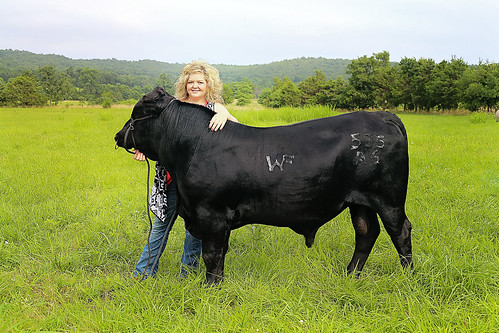
Dakota Williams with cattle
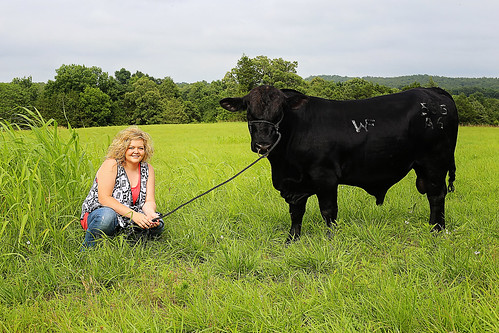
Dakota Williams said raising cattle is her career. At age 18, she already has plenty of experience and within the next 10 years she hopes to own her own farm. Photo by Kim Whitten Photography.
At age 18, Dakota Williams knows exactly what she wants to do with her life — own a farm and raise cattle.
“[Farming] is all I’ve ever known. I’m a third generation farmer, working the same land as my grandparents and I don’t want to see it end,” said Dakota. A member of the Cherokee tribe, Dakota said her ancestors lived off the land and she wants to honor them in her work. “Not many people can say they live in an area where their ancestors came from and they are still trying to make that land better.”
Under the Obama Administration, the U.S. Department of Agriculture has worked to improve housing, better educational opportunities, improve infrastructure and create employment and business opportunities for Native American families, including veterans and youth.
Dakota began her cattle business on her family’s Arkansas farm at age 12 with a Farm Service Agency (FSA) Youth Loan. Today, one month after graduating from high school, Dakota is taking that business and expanding it with an FSA Microloan to meet demand for a specialty mix breed of cow.
But this isn’t a regular microloan. For FSA, it’s the 13,000th microloan issued since the program was implemented in 2013.
“This is an outstanding accomplishment and shows how USDA is working to meet the needs of small, beginning and non-traditional farm operations,” said FSA Administrator Val Dolcini. “We’re helping Dakota build her own version of the American dream. She went from a youth loan to a microloan and will soon be able to graduate to commercial lending and meet the goal of owning her own farm.”
The microloan program allows beginning, small and mid-sized farmers along with non-traditional farm operations to access up to $50,000 in loans using a simplified application process. Participation in the popular program has increased 58 percent since last year, with already 5,000 microloans issued this year alone, at a $24,000 average. About 70 percent of microloans are issued to beginning farmers and 55 percent to first-time FSA borrowers.
For Dakota, that equates to purchasing more Angus cows to breed with Brangus bulls to create an Ultrablack breed. “It’s a growing breed and what more people are wanting,” said Dakota, whose talent for showing and high quality of standards has made her stand out among her peers.
In 2013, she was inducted into the Arkansas Purple Circle, a prestigious club that recognizes junior livestock exhibitors who have earned multiple championship honors at the Arkansas State Fair. She also won the Bill Nix Best of the Best Showmanship in 2013, the International Junior Brangus Breeders Association Reserve Grand Champion Cow/Calf pair in 2014 and was named the Junior Brangus Breeders Association Queen for 2013-14 and 2015-16.
Dakota will carry her long list of awards and accomplishments to college in the fall where she will focus on agriculture business.
“She is a good leader and a good role model for others,” said Willetta Everett, farm loan officer with the Sharp County Farm Service Agency. Everett has worked with Dakota to get a youth loan and the microloan. “Youth loans are really good and teach young students responsibility and work ethics and get them interested in agriculture, so when they graduate into the adult world they carry those traits with them.” FSA youth loans allow for establishing and operating income-producing projects in connection with their participation in 4-H Clubs, FFA and similar organizations. The project must be planned and operated with the help of the organization adviser and produce sufficient income to repay the loan.
While in college, Dakota said she plans to keep pushing her business by working early mornings and late nights, much like she did in high school.
“You have to be dedicated and know what you are getting into,” said Dakota. “If you don’t want to put in the time, then it’s not worth it in the end.”
For more information, visit www.fsa.usda.gov/microloans, www.fsa.usda.gov/youth-loans, www.usda.gov/tribalrelations or visit an FSA county office near you. To find your local FSA county office, visit http://offices.usda.gov.
Dakota Williams with her cattle
Dakota Williams with her cattle. Photo by Kim Whitten Photography.
    

Turning 'food deserts' into an oasis of healthy - Jun. 29, 2015

Whole meals can be had at the corner store: Chips and salsa. Chocolate bars and ice cream. Pretzels and Cheese Whiz.


Tasty occasional snacks, no doubt. But when millions of Americas rely on convenience stores as their primary grocery, offering more nutritious options becomes a public health imperative.


Turning 'food deserts' into an oasis of healthy - Jun. 29, 2015

Team Up for School Nutrition Success

From the #USDA:


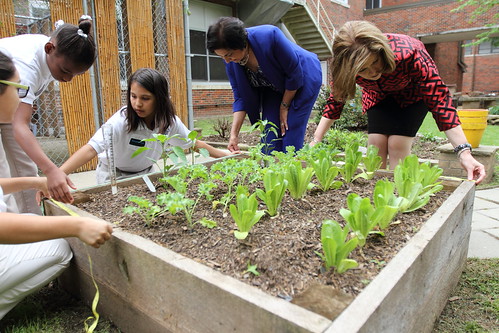
American Heart Association’s Nancy Brown and Executive Director of the Dallas Independent School District’s Food and Child Nutrition Services work with children at the Charles Rice Learning Center in their school garden
American Heart Association’s Nancy Brown and Executive Director of the Dallas Independent School District’s Food and Child Nutrition Services work with children at the Charles Rice Learning Center in their school garden. (Photo credit: Dallas Independent School District)
The following guest blog highlights the important work of our partner the American Heart Association. The association is a tireless advocate for supporting nutritious options in all environments, including the workplace, grocery stores, restaurants, and schools.  AHA recently participated in USDA’s Team Up for School Nutrition Success initiative, connecting them with school nutrition professionals and other partners dedicated to supporting healthy habits in children that will last a lifetime.
By Kristy Anderson, Government Relations Manager, American Heart Association
It’s the number one killer of Americans and it costs the most to treat. Yet 80 percent of cardiovascular disease cases would disappear if we practiced a little prevention such as eating right and exercising more.
Prevention is absolutely essential when it comes to our kids. Right now one in three children in the U.S. are overweight and obese, and only about one percent meet the American Heart Association’s criteria for ideal heart health. Poor nutrition habits are putting children at risk for diabetes and fatty liver disease, and 90 percent of kids consume too much salt, which puts them at risk for hypertension – once thought to be an adult-only disease.
Because children develop eating habits early in life and many get 50 percent or more of their calories in schools, supporting nutritious school foods naturally fell in line with the American Heart Association’s mission: to build healthier lives, free of cardiovascular disease and stroke. I have had numerous association volunteer doctors and cardiologists tell me that we need to do something about the number of chronically ill children that come into their practices sick from the unhealthy foods they eat.
While healthy school food will not magically fix America’s childhood obesity epidemic overnight, we recognize it is most definitely a critical piece of the puzzle. That’s why the American Heart Association joined Team Up for School Nutrition Success as an allied organization.
We are proud to work on healthy foods from every angle, and our partnership with other Team Up organizations exposes us to new ideas from those who work every day to keep our kids healthy, which in turn encourages us to do even more. Once kids are out of school, they need to have access to healthy foods in other parts of their lives, which is why the association advocates for nutritious options in all environments, including the workplace, grocery stores, and restaurants.  
The association is hard at work in our nation’s schools, educating youth about heart-healthy habits overall through a variety of different programs, including Jump Rope for Heart, school gardens, playgrounds and CPR in schools. Our Voices for Healthy Kids initiative is on the ground in communities across the country, working on policies to make all environments healthier for young people. We have always been a strong proponent of science-based nutrition standards in schools, as well as the Healthy, Hunger-Free Kids Act, which is the most seminal public health victory for this generation and those to come. Team Up for School Nutrition Success is a great way for us to connect all of the dots.
School food service directors and their staff are on the front lines of a massive – and long overdue – public health change. They are the motivators who make sure our children eat nutritious foods and develop healthy habits that will last for a lifetime. Team Up for School Nutrition Success provides an opportunity to share the science and evidence on why their work is so important, proving what they’re doing is much more than simply serving kids a meal at school.
Team Up has allowed us to meet these amazing change agents and learn about their triumphs and challenges on the ground. These critical lessons will help us be that much more successful when it comes to keeping our kids healthy.