Search This Blog

Showing posts with label Horicon National Wildlife Refuge. Show all posts

Friday, December 21, 2018

Happy First Day of Winter!

From Horicon National Wildlife Refuge:


Happy First Day of Winter! December 21 also marks the day with the shortest period of daylight and the longest night of the year. The winter solstice is an astonomical phenomenon that occurs when one of the Earth's poles has its maximum tilt away from the Sun. The days will now gradually get longer and it will be less than 3 months until the Spring Equinox! Sunset photo by Rachel Samerdyke/USFWS 

#winter #solstice #season #nature #outdoor #outside #scene #scenic #view 


Monday, December 3, 2018

Virginia Opossum

Photo credit: Horicon National Wildlife Refuge


Virginia Opossums are often out and about during the winter since they do not hibernate. I saw this one sniffing and scurrying this way and that while I was hiking on the refuge. He never saw me and actually came quite close. Usually they are nocturnal, but in the winter they take advantage of the warmer temperatures during the day. Notice they have hairless tails, ears, and paws, making them prone to frostbite when it gets really cold. They are not picky eaters, foraging on just about anything. They are also unique in that they are North America’s only marsupial (pouched animal). Photo by USFWS.

#animal #mammal #marsupial #opossum #possum #nature #wildlife


Monday, September 24, 2018

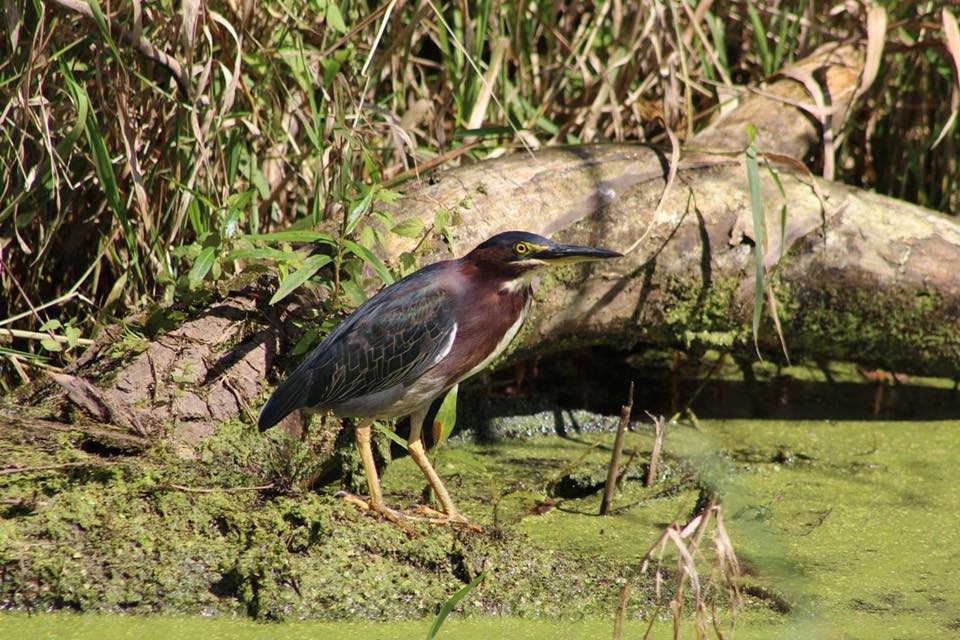
The Green Heron


Compared with most herons, Green Herons are short and stocky, with relatively short legs and thick necks that are often drawn up against their bodies. The Green Heron is one of the world’s few tool-using bird species. It creates fishing lures with insects, earthworms, twigs, feathers, and other objects, dropping them on the surface of the water to entice small fish. Photo by Darlene Lodahl 


#animal #bird #heron #nature #wildlife #usfws #wisconsin #wi 


Wednesday, April 11, 2018

The American Crow | Horicon National Wildlife Refuge


Caw! Caw! Don’t ever underestimate the intelligence of the American Crow: they are extremely smart birds, with problem solving abilities. They are also very social birds. The whole family, including offspring from the previous two years, will work together in raising the young. A group of crows (called a murder) will often work together to ward off predators. This behavior is called mobbing. But remember it’s only a murder of crows if there’s probable “caws”! (Last line from Analytical Grammar/Grammar Planet FB Page). American Crow Photo by USFWS


Monday, February 5, 2018

Barred Owl | Horicon National Wildlife Refuge


Barred Owls are listed on our bird list as “uncommon” on the Refuge during all seasons. Uncommon means “present but not certain to be seen”. It’s a treat to see this owl anywhere; this particular one was spotted just outside of Beaver Dam, along a country road. Barred Owls are known for their distinctive call “Who cooks for you? Who cooks for you-all?” Did you know that their greatest predator is the Great Horned Owl? Barred Owls will move to a different area if Great Horned Owls are present. Barred Owl Photo by Darlene Lodahl

Saturday, February 3, 2018

The Voracious American Tree Sparrow | Horicon National Wildlife Refuge


Usually when someone says “You eat like a bird”, they are implying that you eat very little. But in fact, if you do eat like a bird, especially an American Tree Sparrow, you are a voracious eater! American Tree Sparrows need to take in about 30 percent of their body weight in food each day. They also need to consume about the same amount of water. If they don’t meet these requirements, their body temperature drops and they can easily die in a short time. So keep those bird feeders filled! American Tree Sparrow Photo by Rachel Samerdyke/USFWS.


#animals #Bird #nature #Wildlife #USFWS